Tag Archives: indian railway news

Indian Railways Infrastructure Development: Safety, Modernization and Future Growth

Indian Railways Infrastructure Development: Safety, Modernization and Future Growth

Indian Railways is one of the largest railway networks in the world and plays a vital role in connecting cities, towns, and villages across the country. Every day, millions of passengers and large volumes of freight travel through its extensive network. To meet growing demand and improve passenger safety. Indian Railways continues to invest heavily in infrastructure development, modernization projects, and technological upgrades.

One of the major concerns for Indian Railways over the years has been railway safety, particularly at level crossings. Historically, accidents at unmanned railway crossings accounted for a significant number of railway-related incidents. To address this issue, Indian Railways launched a nationwide mission to eliminate unmanned level crossings on broad-gauge routes. This initiative has substantially improved safety standards and reduced accident risks across the network.
Railway3_zpsc0546f23

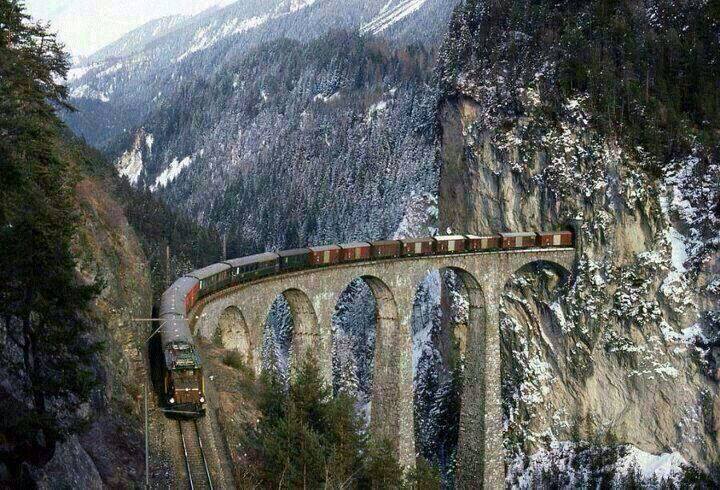
Today, Indian Railways continues to construct Road Over Bridges (ROBs) and Road Under Bridges (RUBs) at busy railway crossings. These projects help improve road connectivity, reduce traffic congestion, and enhance passenger and public safety. The development of such infrastructure is carried out in coordination with state governments, local authorities, and other government agencies.

Modernization of Railway Infrastructure

In recent years, Indian Railways has accelerated its modernization efforts through various infrastructure projects. Railway stations across the country are being redeveloped with modern passenger amenities,. Like: Improved waiting areas, better accessibility, digital information systems, and enhanced cleanliness standards.

Several major railway stations are being transformed into world-class transport hubs with upgraded facilities, shopping areas, food courts, improved parking infrastructure, and seamless connectivity with metro systems, buses, and airports.

Track modernization is another important focus area. Indian Railways is continuously strengthening railway tracks, introducing advanced signalling systems, and expanding electrification projects. These improvements help increase train speeds, improve punctuality, reduce operating costs, and support environmentally sustainable transportation.

Focus on Skill Development and Employment

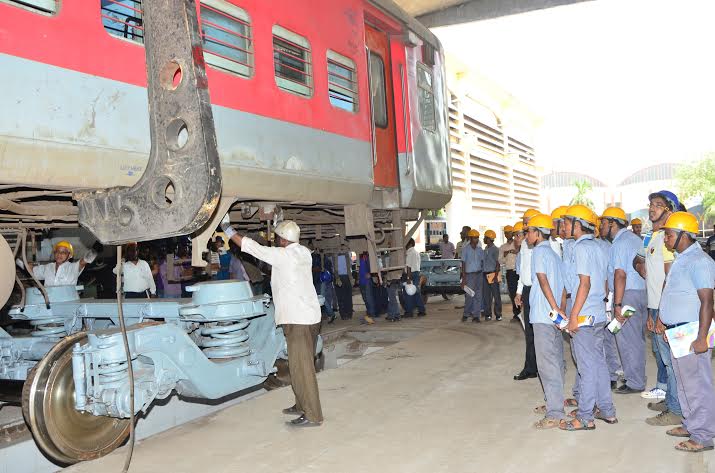
Apart from transportation, Indian Railways also contributes significantly to skill development and employment generation. Through initiatives such as the Railway Skill Development Scheme (RSDS), young people receive vocational training in technical trades including electrical work, welding, electronics, and mechanical maintenance.

The railway network’s extensive infrastructure makes it an ideal platform for delivering skill-based education and practical training, especially in semi-urban and rural regions. These programs help improve employability and create opportunities for self-reliance among the youth.

Future of Indian Railways

The future of Indian Railways is focused on safety, sustainability, and passenger convenience. Projects such as station redevelopment, high-speed rail corridors, dedicated freight corridors, 100% electrification initiatives, advanced signalling technologies, and smart passenger services are helping transform the railway sector.

Indian Railways is also embracing digital technology through online ticketing, real-time train tracking, e-catering services, mobile applications, and integrated passenger information systems. These innovations are making rail travel more convenient and efficient than ever before.

Conclusion

The ongoing Indian Railways Infrastructure Development initiatives reflect the organization’s commitment to creating a safer, faster, and more modern transportation system. Through investments in railway safety, station redevelopment, overbridge construction, skill development, and digital transformation. Indian Railways continues to strengthen its position as the backbone of India’s transportation network. As modernization projects progress, passengers can expect improved services. Enhanced safety standards, and a better overall travel experience in the years ahead.
Railway Skill Development Program: How Indian Railways Supports Skill Training in India

Railway Skill Development Program: How Indian Railways Supports Skill Training in India

Indian Railways is not only one of the largest transportation networks in the world. But also an important contributor to India’s economic and social development. Over the years, the railway network has expanded beyond transportation and has started supporting several initiatives that benefit local communities. One such initiative is the Railway Skill Development Program. Which aims to provide vocational training and skill-based education to youth across the country.

The idea behind this initiative is simple: utilize the vast infrastructure and reach of Indian Railways to help young people acquire employable skills and improve their career prospects. Railway stations and railway training institutes are located across urban, semi-urban, and rural regions, making them ideal locations for skill development activities.

Rl-1

Indian Railways and Skill Development

India has one of the world’s largest railway networks, connecting thousands of cities, towns, and villages. This extensive reach creates an excellent opportunity to support skill training programs for young people, especially those living in remote and underserved areas.

In recent years, the Ministry of Railways and various government organizations have collaborated on initiatives aimed at enhancing vocational education and industry-relevant training. The objective is to equip individuals with practical skills that can help them secure employment, start businesses, or become self-reliant.

Several railway training centers and institutions already offer technical training in fields related to railway operations, electrical systems, mechanical maintenance, welding, electronics, and other trades. These programs help bridge the gap between education and industry requirements.

Railway Skill Development Scheme (RSDS)

One of the major initiatives undertaken by Indian Railways is the Railway Skill Development Scheme (RSDS). Under this program, youth are provided short-term training in various technical disciplines through selected railway training institutes.

The scheme focuses on enhancing employability by offering practical exposure in areas such as:

  • Electrical work
  • Electronics and instrumentation
  • Welding technology
  • Computer basics
  • Mechanical systems
  • Track maintenance awareness
  • Railway-related technical skills

These training programs are designed to provide hands-on learning and improve job readiness among participants.

Benefits of the Railway Skill Development Program

The Railway Skill Development Program offers several advantages for aspiring candidates:

  • Access to quality vocational training.
  • Practical exposure through railway training facilities.
  • Improved employability and job opportunities.
  • Skill enhancement at minimal or no training cost.
  • Opportunities for self-employment and entrepreneurship.
  • Better awareness of technical trades and industrial practices.

The program is particularly beneficial for students, unemployed youth, and individuals seeking technical skills that are in demand across multiple industries.

Future of Skill Development Through Railways

As India continues to focus on workforce development and economic growth, skill training remains a national priority. Indian Railways, with its extensive infrastructure, training institutes, and nationwide presence, is well-positioned to support this mission.

The continued expansion of digital learning, vocational training centers, and industry-focused skill programs can help create a more skilled workforce capable of meeting the demands of modern industries. By leveraging railway resources and training facilities, more young people can gain valuable knowledge and practical experience that contributes to their professional growth.

Conclusion

The Railway Skill Development Program reflects Indian Railways’ commitment to supporting education, employability, and skill enhancement. Through initiatives such as the Railway Skill Development Scheme and various training programs, the railway network is helping thousands of young people develop practical skills for a better future. As these programs continue to expand, they are expected to play an increasingly important role in creating a skilled and productive workforce for India.

UTS Ticket Booking Mobile App by Indian Railways

UTS Ticket Booking Mobile App by Indian Railways

Indian Railways has continuously introduced digital services to make train travel easier and more convenient for passengers. One of the most useful initiatives is the UTS Mobile App (Unreserved Ticketing System), which allows passengers to book unreserved train tickets directly from their smartphones without standing in long queues at railway stations.

The UTS Mobile App was developed by the Centre for Railway Information Systems (CRIS) and is officially supported by Indian Railways. Today, the app is available across most railway zones in India and supports Android as well as iOS devices. It has significantly simplified the process of purchasing unreserved tickets, platform tickets, season tickets, and renewal of passes.

Install the UTS Mobile App

Passengers can download the official UTS application from:

The app provides a simple and user-friendly interface that guides users through registration, ticket booking, wallet management, and ticket history.

Registration Process

To use the UTS Mobile App, passengers must first register using their mobile number. Registration can be completed either through the mobile application or the official UTS website.

During registration, users need to provide basic details such as:

  • Mobile Number
  • Name
  • Password
  • City
  • Preferred Booking Preferences

After successful registration, passengers can log in and start booking tickets immediately.

R-Wallet and Payment Options

The UTS App offers multiple payment methods for ticket booking. Users can make payments through:

  • R-Wallet
  • UPI
  • Debit Cards
  • Credit Cards
  • Net Banking
  • Digital Wallets (where available)

The R-Wallet is the dedicated railway wallet provided within the UTS system. Passengers can recharge it online and use the balance for faster ticket bookings. If a ticket is cancelled, the eligible refund is credited back according to railway rules.

Features of the UTS Mobile App

The UTS Mobile App offers several useful services for daily and occasional travelers:

1. Unreserved Ticket Booking

Passengers can book journey tickets for unreserved travel without visiting a ticket counter.

2. Platform Ticket Booking

Platform tickets can be purchased directly through the app, saving valuable time during station visits.

3. Season Ticket Booking and Renewal

Regular commuters can buy and renew Monthly Season Tickets (MST) and Quarterly Season Tickets (QST) using the application.

4. Paperless Ticketing

In many sections, passengers can travel using a paperless ticket displayed on their mobile phones. There is no need to carry a printed ticket.

5. Quick Booking

Frequently travelled routes can be saved for faster ticket generation, making the booking process extremely convenient for daily passengers.

6. Ticket History and Profile Management

Users can access previous bookings, check wallet balance, and manage their passenger profile within the application.

Advantages of Using UTS Mobile App

The UTS Mobile App provides several benefits to passengers:

  • Eliminates long queues at ticket counters.
  • Saves time during peak travel hours.
  • Offers paperless and eco-friendly ticketing.
  • Provides easy ticket renewal facilities.
  • Supports digital payment methods.
  • Allows quick booking for frequently travelled routes.
  • Accessible anytime and anywhere through smartphones.

How to Travel Using UTS Tickets?

After booking a ticket through the app, passengers receive a digital ticket containing complete journey details. In paperless mode, the mobile ticket itself serves as valid travel authority and can be shown during ticket inspection.

Passengers should ensure that their phone remains charged throughout the journey and that the ticket is available for verification whenever requested by railway staff.

Conclusion

The UTS Ticket Booking Mobile App has transformed unreserved railway ticket booking in India. By combining convenience, speed, and digital technology, it allows passengers to purchase tickets within minutes without standing in queues. Whether you are a daily commuter, occasional traveler, or someone visiting railway stations frequently, the UTS Mobile App is a smart and reliable solution that makes train travel simpler and more efficient.

Apta station: A Hero among Film Producers

Indian Railways, hit by falling incomes from film shooting at its areas, found a friend in need last budgetary year: Apta, a railroad station on the Panvel-Roha course of Central Railway, around 85 km from Mumbai. In the year 2015-16, the station earned Rs.32 lakh from film shooting and wound up as the most noteworthy income worker from film shoots for Central Railway. Which has other more well-known destinations like the Chhatrapati Shivaji Terminus (CST) and the Churchgate station.

The station clearly has numerous favorable scene offerings over the 18 different options in Central Railway well known among movie producers of all shades.

The Apta station has been famous for a few reasons. It being outside the local train framework and its promixity to Mumbai is its true value proposition. Also, being more reasonable contrasted with other bigger and busier stations. It is less swarmed and there are less issues when it comes to security.

Rs.24.97 lakh of revenue was collected for the Central Railway from a four-day shooting for the Hindi film “Baaghi”, most noteworthy by any film in 2015-16.

An estimated cost between Rs.50,000/- and Rs.60,000/-  is incurred for a day’s shooting at Apta railroad station. These costs are much less than the Rs.1.25 lakh charged for a day on the Mumbai local system.

A shar fall from Rs.6.74 crore in 2013-14 to Rs. 3.2 crore in 2014-15 was observed in incomes from film shoots at Indian Railways Stations.

Traditionally and even today the Goregaon rail station is a favored destination among movie producers for its nearness to the film city. TV projects like “CID” and “Kaun Banega Crorepati” do their shooting here.

More than 300,000 individuals utilize Google’s free Wi-Fi at Indian railway stations

An offering of free Wi-Fi services at India’s rail stations was commenced prior this year by Google, with Mumbai Central being the pilot station. In under five months, this free Wi-Fi provision became accessible in 15 rail stations, and it is claimed by Google that more than 300,000 suburbanites are utilizing it consistently. Additionally Google has planned to provide this free Wi-Fi service at 17 of Mumbai’s busiest local stations before the culmination of current year.

A partnership betwee Google and RailTel was struck to dispatch this free Wi-Fi offering called ‘RailWire’. Subsequent to operating at Mumbai Central, the RailWire service has been presented at stations in Allahabad, Ujjain Junction, Jaipur, Bhopal, Bhubaneshwar, Ernakulam, Patna,  Kacheguda, Raipur, Ranchi, Pune, Vijayawada, Vishakhapatnam and Guwahati.

Google has aimed to reach 100 rail stations by this year, and 400 more stations in a span of 2 years. They have been focused on Local network stations in Mumbai, as they serve 1.5 million commuters.

Google says that RailWire service will be setup in 17 of the busiest Mumbai stations before the current year’s over. The take off will start with stations like Bandra Terminus, Borivali, Chattrapati Shivaji Terminus (CST), Churchgate, Dadar, Kurla, Kalyan, Vashi, Thane and Panvel.

Mumbai’s local rail system being the busiest rail frameworks on the planet, commuters will need to sit back and watch how the RailWire system can deal with the sheer number of clients attempting to utilize free Wi-Fi. For workers however it will be a help as now they can peruse the net or watch live streams and videos online while sitting tight for their trains. It eases the travel as travelers can surf the net or keep themselves entertained.

It’s not only Mumbai’s neighborhood train stations that are getting free Wi-Fi administrations. A month ago, a 10-year contract to Techno Sat Comm was granted to install at the Delhi Metro hubs, offering free Wi-Fi services to suburbanites. Paytm too has been in plans to install its own free open Wi-Fi service, beginning with Noida Sector 18 metro station.

Google likewise isn’t the one and only offering free Wi-Fi administrations at open spots. BSNL was among the first to begin taking off Wi-Fi hotspots at open spots. Alongside air terminals like Srinagar, BSNL’s Wi-Fi hotspots are accessible at visitor destinations like Puri, and Malpe shoreline in Udupi locale among others. Indeed the organization anticipates setting up to 40,000 Wi-Fi hotspots around the nation.

On similar lines, Aircel and Videocon too are putting forth free Wi-Fi at select spots. While everyone’s eyes are on Reliance Jio’s 4G rollout, the organization is teasing its capacities by offering Wi-Fi hotspots at select spots. All were inspired by the service of Reliance Jio’s free Wi-Fi service at Wankhede Stadium in Mumbai recently.

Book Indian Railway’s ‘Bharat Darshan Tourist Trains’ for just Rs 830 via IRCTC

Bookings are as of now open for Indian Railways Bharat Darshan Tourist Trains, a financial plan friendly bundle made by the IRCTC with comprehensive administrations on a committed visitor train, for household voyagers who need to investigate a portion of the nation’s most mainstream religious destinations.

The bundles can be booked for just Rs. 830 for every individual for each day, though the families can settle in the midst of a furlough treks to choose destinations in the east or south of the nation or that cover real religious locales.

The Bharat Darshan Tourist train has 10 mentors overhauled via prepared visit directors, on-board friendliness staff and security staff. The bundle incorporates train transportation, street transportation, convenience, touring at traveler areas and locally available and off-board dinners.

The ‘East Darshan’ would constitute of trains beginning from Chandigarh and venturing out by means of Delhi Cantt to cover Jagannath Puri, Gangasagar, Baidyanath Dham, Gaya, Banaras and Ayodhya.

The ‘7 Jyotirlinga’ bundle starting on May 23rd from Chandigarh by means of Delhi Cantt will cover Ujjain (Omkareshwar and Mahakaleshwar), Dwarka (Nageshwar), Veraval (Somnath), Aurangabad (Grishneshwar) and Nasik (Bhimashankar and Triyambakeshwar).

Aside from that, another ‘7 Jyotirlinga’ visit starts on June 6th from Delhi Safdarjung by means of Lucknow covering Ujjain (Omkareshwar and Mahakaleshwar), Dwarka (Nageshwar), Veraval (Somnath), Aurangabad (Grishneshwar) and Nasik (Bhimashankar and Triyambakeshwar).

The ‘Dakshin Darshan with Shirdi’ visit bundle begins on June 27th from Chandigarh by means of Delhi Cantt covering Shirdi, Tirupati, Kanchipuram, Rameshwaram, Madurai, Kanyakumari, Mysore and Bangalore.

Up Next: Lounges with WiFi, food and loads more at Railway stations in India

Regardless of the amount you attempt to disregard, Indian Railways is making the lives of voyagers simpler by the day. As per late media reports, the Service of Railways has endowed IRCTC with the errand of setting up new official parlors in 49 stations the nation over.

These official parlors would be furnished with a wide range of present day facilities at a charge. A portion of the principle facilities offered in these parlors incorporate TV, Wireless Internet, food and drink, washing and changing facilities, and attendant services for pre-departure and post-arrival help to travelers of all classes of travel. Railroad travelers willing to benefit these administrations would require to demonstrate their photo ID proofs and legitimate train tickets.

Starting now, these official parlors as of today exist in the New Delhi, Jaipur and Agra stations. Worked in present day engineering styles, complete with all the aforementioned facilities set up, these parlors are accessible at sensible costs. Charges for the one at New Delhi begins at Rs 150 and for the initial two hours and Rs 50 for consistently from that point. While the charges at Jaipur and Agra stations begin from Rs 100 for the initial two hours, trailed by Rs 50 every hour after that.

Bio-Toilets to be installed in Train Engines for Drivers!

The engines of Indian Railway Trains now will have its own little Bio-Toilet installed.

The toilets will be modern with its own intelligence. For example, to ensure safety, the toilet door will not open while the train is moving. Once the train halts to a stop, the toilet can be used. Also, while the driver is inside the toilet, Brakes will be engaged and cannot be released until the driver comes out.

This little step to serious comfort of the driver was also publicized by our Railway Minister Mr. Suresh Prabhu in the 2016-17 Rail Budget speech.

India has close to 60,000 train drivers working currently including a growing number of female drivers. They will be hopeful of the realization of this initiative.

Railway Minister Suresh Prabhu invites foreign investment for manufacturing

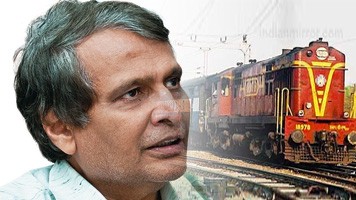
The Railway Minister has made many plans for developing and improving the standards of the Indian Railways. On 29th August, Suresh Prabhu invited few countries for setting up manufacturing units in India as the Indian government will be putting in $120 billion for the development of the railway services over the coming 5 years.

suresh_prabhu_budget2015_railway_minister_budget_41_0515_356

The Minister recently stated that transport system should be safe and secure, with no scope of accidents, to safeguard the people. He also added that the main focus is on the safety of the Indian Railways. It is essential for everyone to travel safe with a little help from the latest technologies, he said while at an international meet.

The seminar was focused on discussing the advances in communication, control and command for Metro and any high speed transit system which will be introduced. The meet saw many representatives from nations like Japan, Russia, Korea and many others in attendance.

Suresh Prabhu also highlighted that there would be a requirement of more investment in the future to modernize and safeguard the rail sector. He also enlightened everyone about the fact that India has a major advantage when it comes to skilled manpower, large manufacturing bases and also a big market. He is bringing in funds from foreign countries and giving them the option to make India their manufacturing base. He also stated that India has a positive environment when it comes to production and manufacturing. And that’s why he wants to partner with several countries so that India is a manufacturing hub. Companies can manufacture their goods here and export it from here, he added.

Other than that, he emphasised the fact that development of technology is also important. Remote sensing will help control accidents and provide people with the utmost safety. Suresh Prabhu made another great point at the seminar in which he stated that we should take up new technological methods to minimise any human errors that are causing dangers. He also added the main objective is to take up the zero accident missions and try to succeed.

This will require a lot of use of technology and new methods to advance other innovations in the rail sector. Apart from that, proper manpower will be an added bonus to the project.

Suresh Prabhu also wants more and more improvements in every way to secure all the people from accidents and minimise any human errors which are causing problems.

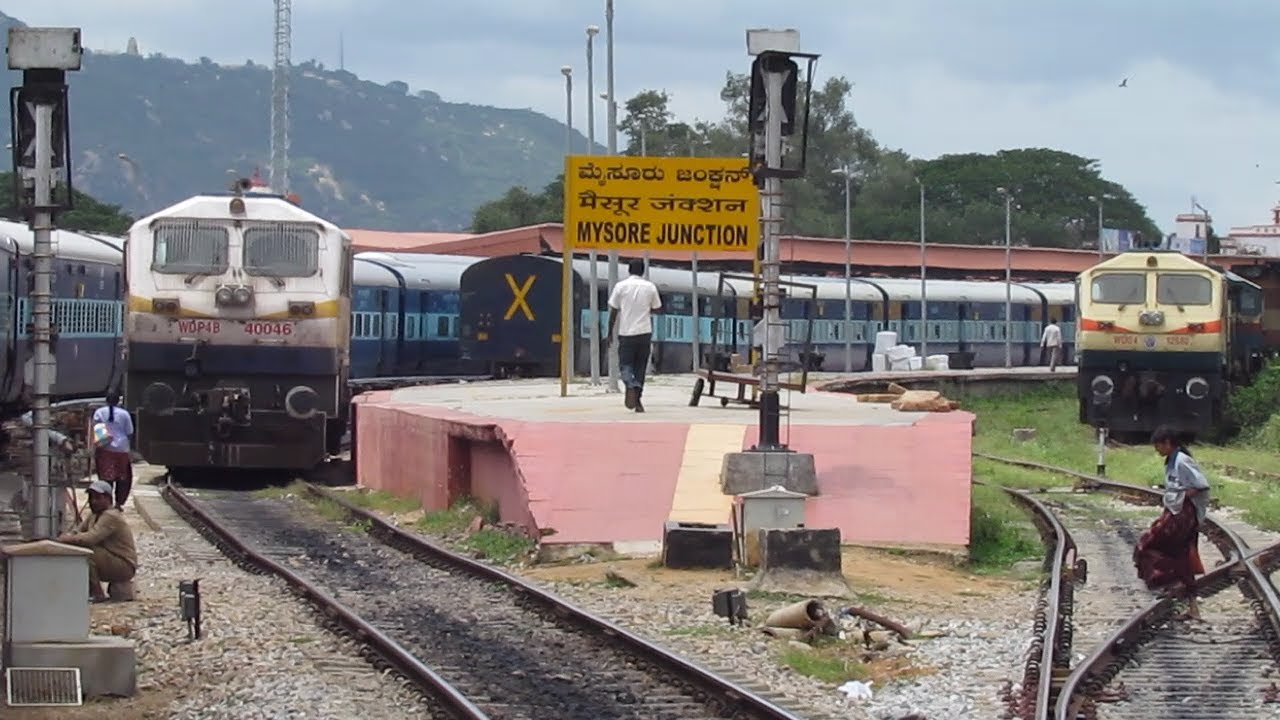
The second railway terminal at Mysuru might remain a dream

The anticipated project for a 2nd railway terminal for the city may not happen due any sooner due to the current importance on the capacity of the track and increasing facilities for the passengers. The Railway Board has highlighted the current focus of authorities to the divisional and zonal railway officials to use the MPLAD money to increase passenger services. The time span to finish the track which will double between Tumakuru to Arsikere and Chikjajur to Hubbali shows the focus of the Indian Railways.

The 2nd terminal for Mysore was proposed at the Belagola. The Divisional Railway Manager, Vinod Kumar had specified that this project will be a part of the approved developments and would come in force soon. The main objective is to reduce the pressure at Mysuru railway station. And for that the objective was to build 2 or 3 stabling lines with a pit line for care at the cost of Rs. 28 crores.

If sources are to be believed, all the projects involving heavy investments are put on hold currently and the main emphasis is on finishing the works in progress without any interruptions. The requirement for the second terminal was important because of the increased train traffic to Mysuru.maxresdefault

The current facilities at the station:

Presently the station has six platforms and handles around 42 trains daily but the numbers are expected to rise up gradually. But the irony in the situation is that new and additional trains can’t be announced without an increase in the capacity of the Mysore station which is closed in. There will be a need for new yards to accommodate new trains, and this cannot be proposed for now. Hence, it was suggested that Belagola can be developed as a 2nd terminal line and all the passengers and express trains would depart towards the Hassan to Ariskere line from there.

This idea would reduce the entire load on Mysuru station if it would have accommodated additional trains for passengers. But railway sources have denied any proposal of such a project for now. The other considered station for a possible terminal was Ashokapuram. But the station has a limitation when it comes to land.

Another alternative was to expand some trains up to Chamarajanagar, but this idea required them to create a new maintenance plot, which would not be possible due to the scarcity of water in that district.

The current railway projects are developing quickly and hopefully, Mysuru stations will announce new trains.