
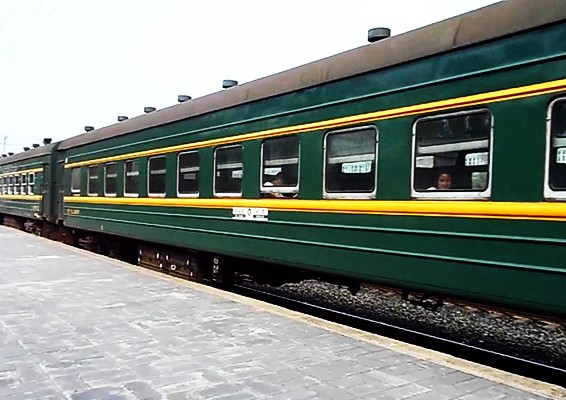
All Trains Soon Will Have 22 Coaches to Run on Any Route
Why Was a Standard 22-Coach Formation Proposed?
Indian Railways has traditionally operated trains with different rake compositions. Depending on the service and its passenger demand, trains could have different combinations of air-conditioned, sleeper, general, luggage, pantry and other coaches.
The variation created operational challenges. If a particular rake became unavailable because of maintenance or another operational issue, replacing it with another rake was not always straightforward because the replacement could have a different coach composition or length.
The standardisation proposal aimed to improve operational flexibility. During an earlier railway modernisation programme, authorities proposed a 22-coach formation for suitable train services. This approach could allow railway authorities to deploy a standardised rake on another compatible route without making extensive changes.
However, railway operations are more complex than simply assigning the same number of coaches to every train.
Why Can’t Every Train Have Exactly 22 Coaches?
A uniform coach count is not practical for every railway service.
The number of coaches that can operate on a particular route depends on several factors, including:
- Platform length
- Loop-line and siding capacity
- Maintenance and washing-line length
- Passenger demand
- Route characteristics
- Train braking and locomotive requirements
- Coach type
- Station infrastructure
- Operational restrictions
- The specific service pattern
A short-distance or lower-demand service does not necessarily require the same formation as a heavily travelled long-distance train.
Similarly, some premium and special services may have different compositions according to their operational requirements.
Therefore, while standardisation can improve efficiency, it does not mean that every train across the Indian Railways network must have exactly 22 coaches.
The Shift from ICF to LHB Coaches
Another major development since the original article was published has been the widespread transition toward LHB (Linke Hofmann Busch) coaches.
Indian Railways has progressively replaced older ICF-designed passenger coaches with LHB coaches on many services. LHB coaches offer improved safety characteristics, higher permissible speeds and modern passenger amenities compared with the older conventional designs.
The move toward LHB coaches has also supported broader standardisation of railway rolling stock.
Modern passenger trains increasingly use combinations of LHB coaches, although the exact composition continues to vary according to the service. Read More…
Train Composition Depends on Passenger Demand
Indian Railways operates an enormous variety of services, from short-distance passenger and suburban services to long-distance express trains.
Coach composition is therefore determined partly by demand.
For example, a high-demand long-distance route may require a larger number of sleeper or air-conditioned coaches, while another route may require more general or reserved seating capacity.
Railways can also modify coach composition when demand changes. Additional coaches may be attached during festival periods, holidays or periods of unusually high passenger demand, subject to operational and infrastructure constraints.
This flexibility is important because passenger demand is not uniform throughout the year.
How Standardisation Can Help Indian Railways
Although a universal 22-coach rule has not become the standard for every train, the underlying concept of standardised rake formations can provide important operational advantages.
If compatible trains have similar formations, railway authorities can potentially use available rakes more efficiently. This can be particularly useful when a rake is undergoing scheduled maintenance, becomes unavailable because of an operational problem or needs to be substituted.
Standardisation can also simplify maintenance planning, crew operations, coach allocation and turnaround procedures.
However, such standardisation has to be balanced against the actual requirements of individual routes.
Platform and Infrastructure Requirements
One of the biggest challenges associated with longer train formations is railway infrastructure.
A train can only operate efficiently if stations along its route have platforms and associated infrastructure capable of accommodating its length.
Longer formations may require appropriate platform lengths, stabling facilities, washing lines, maintenance facilities, signalling arrangements and adequate space at terminal stations.
This is why increasing the number of coaches is not simply a matter of attaching additional coaches to a train. The infrastructure throughout the route must also be capable of supporting the longer formation.
Modernisation of Indian Railway Operations
The original 22-coach proposal formed part of a much broader effort to improve railway efficiency and standardise operations.
Since then, Indian Railways has undergone significant changes in rolling stock, electrification, signalling, station infrastructure and passenger services.
The introduction and expansion of modern LHB coaches, large-scale railway electrification, upgraded maintenance facilities and technology-based operational monitoring have all contributed to improving the efficiency of the railway network.
Indian Railways is also focusing on modern trainsets and newer forms of passenger transportation. These developments show that future railway operations will not depend on a single fixed coach composition.
Is Every Indian Train Now a 22-Coach Train?
No.
Indian Railways does not currently require every train to have 22 coaches. Authorities introduced the 22-coach concept earlier to promote greater standardisation and operational flexibility. In actual railway operations, train formations continue to vary depending on the type of train, route, passenger demand and infrastructure.
Some services may operate with formations around the 22-coach concept, while others can have fewer or more coaches depending on operational requirements.
Therefore, passengers should not assume that every train will have the same number of coaches or that a particular platform position will remain identical across different services.
The Future of Train Standardisation
Standardisation remains useful for a railway network as large and complex as Indian Railways, but modernisation is moving beyond simply fixing one coach count for every train.
The practical objective is to create compatible, modern, and flexible train formations. Railway authorities can deploy these formations efficiently while matching the infrastructure and passenger requirements of each route.
The transition to LHB coaches, improved railway infrastructure, electrification and newer train technologies is gradually changing the way Indian Railways plans and operates passenger services.
“Indian Railways introduced the 22-coach standardisation proposal as part of its earlier efforts to improve operational flexibility. However, the proposal does not mean that every train in India must follow a 22-coach formation today.