
Track Live Train Status Online | Train Tracking System
Tracking a running train has become considerably easier with the digital services introduced by Indian Railways. Instead of depending on outdated train-enquiry websites or repeatedly calling railway helplines, passengers can now check live train status online, including the train’s current running position, expected arrival, departure information and delay status. Indian Railways has increasingly integrated these services into modern digital platforms, making Train Tracking System more convenient for passengers.
With thousands of trains operating across the country, knowing the current status of a train is particularly useful when you are travelling to pick someone up from a station, waiting for a connecting train, or planning your journey around an expected arrival time.
What Is a Train Tracking System?
A train tracking system allows passengers to obtain information about the movement of a particular train during its journey. Depending on the service being used, passengers can check details such as the train’s scheduled and expected arrival and departure times, its running status, delay information, upcoming stations and other journey-related information.
Indian Railways uses technology and operational data to monitor train movements and provide passengers with updated information. The railway system has also strengthened its digital infrastructure and real-time monitoring capabilities to improve punctuality and passenger information services.
The information available online can be especially helpful when a train is running late. Instead of relying only on its scheduled timetable, passengers can check the latest available running information before leaving for the station.
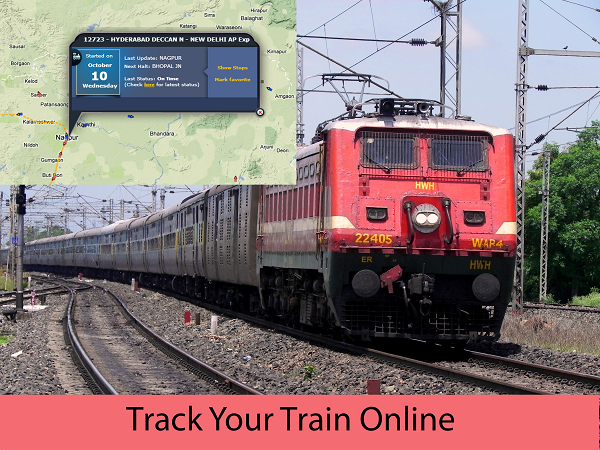
How to Track Live Train Status Online
There are several ways passengers can access train-running information today. The most convenient options are Indian Railways’ digital services and the RailOne app.
1. Track Your Train Through RailOne
RailOne is Indian Railways’ integrated passenger-services application, launched in July 2025. It brings several railway services together in one platform, including ticketing, PNR enquiry, train enquiry, live train tracking, RailMadad and other passenger services.
To check the running status of a train:
- Open the RailOne app.
- Select the train enquiry or live train tracking service.
- Enter the train number or train name.
- Select the relevant journey date.
- Check the latest available running information.
- Review the train’s current status, delay information and expected station timings.
RailOne is available for Android and iOS devices and uses a single-sign-on approach for integrated railway services.
The app has become a significant part of Indian Railways’ digital passenger ecosystem. By July 2026, RailOne had recorded 4.55 crore downloads, with an average of 9.65 lakh ticket bookings per day, according to the Ministry of Railways.
2. Use Indian Railways’ Train Enquiry Services
Passengers can also access train-running information through Indian Railways’ official digital enquiry systems. These services provide information about train schedules and running status based on the available railway operational data.
When checking a train, it is useful to have the train number available because it helps identify the correct service quickly, particularly when different trains have similar names or operate on similar routes.
3. Check Before Leaving for the Station
A train’s scheduled departure time should not always be treated as its actual operating status. Delays, operational changes, weather conditions, congestion and other railway-related circumstances can affect the actual movement of a train.
Therefore, passengers should check the latest running status before leaving for the station, particularly when the train is expected to arrive late.
This is also useful for people going to a railway station to receive family members, friends or business travellers. Instead of waiting unnecessarily at the station, they can check the latest available train information and plan their arrival accordingly.
What Information Can You Check?
A modern train tracking system can provide several useful details, depending on the train and the information available at the time of enquiry.
These may include:
- Train name and train number
- Journey date
- Scheduled departure time
- Expected departure time
- Scheduled arrival time
- Expected arrival time
- Current running status
- Delay information
- Previous station
- Upcoming station
- Route and scheduled stoppages
- Train movement information
- Platform-related information where available
RailOne has also been expanded to provide platform information and other journey-related services in addition to live train running status.
Why Live Train Tracking Is Important
Live train tracking is particularly valuable for long-distance journeys. A train may pass through several states and hundreds of kilometres during a single journey, and its running position can change considerably between the scheduled departure and arrival times.
For example, if a train is scheduled to reach your station at 6:00 PM but is running several hours late, checking the live status before leaving home can prevent an unnecessary wait at the station.
It is equally useful for passengers travelling with family members, elderly people or children because knowing the latest train status can make station planning easier.
Passengers with connecting journeys can also use train-running information to assess whether they need to make additional arrangements if their incoming train is delayed. Read More…
Live Train Status vs Scheduled Train Timetable
It is important to understand the difference between a train timetable and live train status.
A timetable provides the planned schedule of a train—its scheduled departure, arrival and stoppage times. Live running status, on the other hand, provides the latest available information about how the train is actually operating.
If a train is running according to schedule, the two may appear similar. However, when there is a delay or operational change, the live running information becomes much more useful.
Therefore, passengers should check the live status close to their journey rather than relying exclusively on information viewed several hours or days earlier.
Indian Railways’ Digital Transformation
Train tracking is part of a much broader digital transformation taking place across Indian Railways.
In recent years, railway services have increasingly moved toward integrated digital platforms. The RailOne app combines reserved and unreserved ticketing, platform-ticket services, train enquiry, PNR enquiry, RailMadad and live train tracking in a single application.
Indian Railways has also continued investing in technology for operational monitoring and passenger communication. In 2025–26, the railway system reported approximately 25,000 trains operating daily, while technology-based systems were being used for real-time monitoring of punctuality and railway operations.
This means passengers increasingly have access to railway information without having to depend entirely on station enquiry counters.
Check the Train Status Before You Travel
A train’s scheduled timetable is useful for planning, but checking its latest running status is an important final step before heading to the station.
Whether you are travelling yourself, receiving someone at the station or coordinating a connecting journey, a train tracking system can help you make better decisions based on the latest available railway information.
With services such as RailOne bringing live train tracking and other railway facilities together, checking the status of a running train is now much simpler than it was when passengers had to rely on older enquiry systems.
For the most accurate information, always check the latest available status through official Indian Railways digital services shortly before your journey.