
Indian Railways and Bio-Diesel: From Early Experiments to a Greener Rail Network
Indian Railways has been exploring alternative fuels and energy-efficient technologies for many years as part of its efforts to reduce dependence on conventional fossil fuels and lower the environmental impact of railway operations. One of the earlier initiatives was the use of bio-diesel blended with High-Speed Diesel (HSD) in diesel locomotives. However, the role of bio-diesel in Indian Railways has evolved significantly as the network has moved rapidly toward electrification and other cleaner technologies.
Indian Railways’ Early Bio-Diesel Initiative
The use of bio-diesel by Indian Railways dates back to the early 2000s, when the organisation began exploring renewable fuels that could supplement conventional diesel.
Indian Railways subsequently introduced a 5% bio-diesel blend with High-Speed Diesel (B5) for traction purposes. Railway authorities formally started the initiative on 5 June 2015 and gradually introduced the blended fuel at railway fuel locations across different zones. According to Indian Railways’ environmental documentation, 5% bio-diesel blending had commenced at 76 Railway Consumer Depots.
The objective was to reduce diesel consumption, lower greenhouse-gas emissions and make better use of renewable fuel sources.
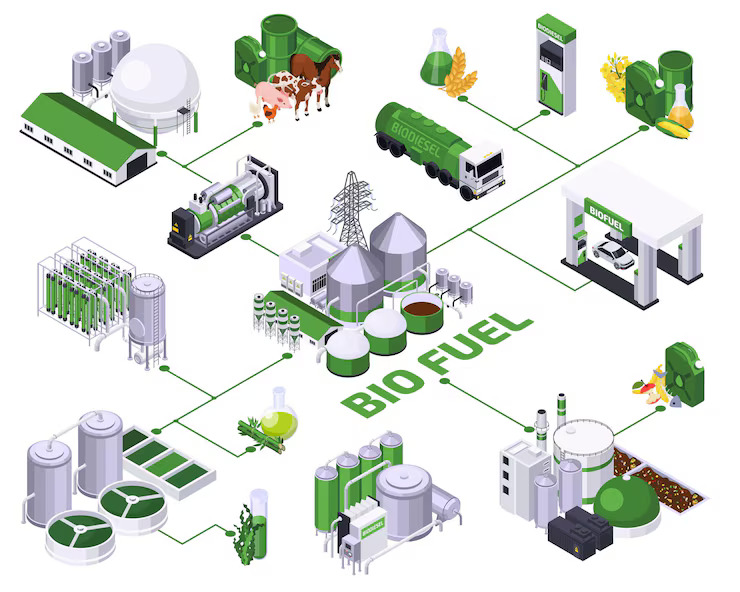
Producers can make biodiesel from several renewable feedstocks, including vegetable oils, used cooking oil, animal fats, and other biological materials. Its use as a blend with conventional diesel can therefore provide an alternative to relying entirely on petroleum-based fuel.
What Happened to the Proposed Bio-Diesel Plants?
The original plan announced by Indian Railways in 2012 involved establishing four bio-diesel esterification plants, each with a proposed capacity of 30 tonnes per day. Railway authorities initially planned the first two plants at Tondiarpet in Chennai, Tamil Nadu, and Raipur in Chhattisgarh. They planned to finalize the remaining locations later. The Ministry of Railways expected to commission these two plants in 2013. However, writers should not present these historical plans today as new announcements or ongoing projects awaiting commissioning.
Subsequent railway documents show that the Tondiarpet and Raipur projects formed part of Indian Railways’ earlier efforts to develop in-house bio-diesel production. In 2013, the Railways also acknowledged that large-scale adoption of bio-diesel was constrained by the availability of sufficient quantities at economical prices.
Why Bio-Diesel Was Considered Important
Bio-diesel was attractive because it offered the possibility of partially replacing petroleum-derived diesel with fuel produced from renewable biological sources.
Indian Railways’ environmental documentation notes that replacing a portion of HSD with bio-diesel can reduce certain pollutants and greenhouse-gas emissions. Railway authorities also explored various feedstocks for potential biodiesel production, including palm oil, jatropha oil, cottonseed oil, used cooking oil, and animal fat.
The initiative therefore formed one part of a broader effort to improve fuel efficiency and reduce the environmental footprint of railway operations.
Indian Railways Is Moving Beyond Bio-Diesel
The most important change since the original article was published is the transformation of Indian Railways’ energy strategy.
Rather than relying primarily on alternative liquid fuels for railway traction, Indian Railways has made electrification and energy efficiency central to its long-term strategy. The expansion of electric traction has significantly reduced the network’s dependence on diesel-powered locomotives.
Railways has also adopted technologies such as regenerative braking, Head-On Generation (HOG), energy monitoring systems, Auxiliary Power Units and remote monitoring of locomotive idling to reduce fuel and energy consumption. Earlier railway programmes also included CNG-based dual-fuel technology for selected diesel power cars.
The transition is reflected in locomotive production as well. During 2025–26, Indian Railways produced 1,674 locomotives, while the network continued expanding its electric locomotive fleet and associated infrastructure.
Hydrogen Trains: The Next Step in Green Rail Transport
Indian Railways has now moved into another stage of clean-transport development with hydrogen fuel-cell technology.
In 2026, Indian Railways approved its first indigenous hydrogen fuel-cell trainset for operation on the Jind–Sonipat section. The 10-car train uses hydrogen fuel-cell propulsion, with the system generating electricity through a chemical reaction between hydrogen and oxygen. Water vapour is the principal emission at the point of use.
The hydrogen train was subsequently flagged off between Jind and Sonipat on 17 July 2026. According to the Ministry of Railways, the train had travelled more than 1,200 kilometres shortly after its launch and had saved more than 3,200 litres of diesel consumption.
This represents a major shift from the early bio-diesel experiments toward cleaner forms of railway propulsion. Read More…
The Future of Sustainable Indian Railways
Bio-diesel remains an important chapter in the environmental evolution of Indian Railways. But it is no longer accurate to describe the old four-plant proposal as the centrepiece of the railway’s current green-fuel strategy.
The broader transformation now includes electrification, energy-efficient locomotives, renewable-energy initiatives, reduced diesel dependence and emerging hydrogen technology. In 2026, Indian Railways is therefore moving toward a much wider clean-energy strategy rather than depending on a single alternative fuel.
From experimenting with bio-diesel blends to introducing hydrogen fuel-cell trains, the journey demonstrates how Indian Railways’ approach to sustainable transportation has changed over time. The objective remains unchanged: reduce energy consumption and environmental impact. However, modern technologies now offer more advanced ways to achieve these goals.
To find out more updates related to Indian Railways and the travel experience through Indian luxury as well as economy trains, visit www.travelkhana.com.